
How Much Can Your Mutual Fund Investment Grow?
Use our free Mutual Fund Calculator to estimate SIP and lump-sum returns, maturity value and total wealth based on your investment and expected return.
✓ Free & easy to use ✓ Instant results ✓ No sign-up
See What Your Mutual Fund Investment Could Grow To
Planning a SIP or lump-sum mutual fund investment becomes easier when you know how much your money could grow over time. Our Mutual Fund Calculator helps you estimate the future value of your investment based on the amount invested, investment period and expected rate of return.
Whether you are starting a monthly SIP, investing a lump sum or comparing different investment scenarios, you can quickly estimate your total investment, estimated returns and maturity value. Change the investment amount, tenure or expected return to see how different assumptions could affect your potential wealth.
Use the Mutual Fund Calculator
Mutual Fund Calculator Online
Estimate how your mutual fund investment could grow over time. Calculate your total investment, estimated returns, final corpus and wealth growth based on your investment amount, expected return and investment period.
Key Takeaway
Your estimated mutual fund corpus will appear here.

What Does the Mutual Fund Calculator Show?
A Mutual Fund Calculator estimates how your investment could grow over a selected period based on the amount invested, investment duration and expected rate of return. It helps you understand your total investment, estimated returns and future value before making an investment decision.
Total Investment
This is the total amount you are expected to invest during the selected investment period. For a SIP, it is based on your periodic investment amount and the number of instalments. For a lump-sum investment, it is the initial amount invested.
Estimated Returns
Estimated returns represent the potential growth of your investment based on the expected rate of return entered in the calculator. Actual mutual fund returns can be higher or lower because market-linked investments do not provide a fixed return.
Future Value of Investment
The future value, or estimated maturity value, is the combined value of your invested amount and estimated returns at the end of the selected period. It gives you a quick view of how your mutual fund investment could grow over time.
How does a mutual fund calculator work? It uses your investment amount, investment tenure and expected return to estimate the potential future value of your mutual fund investment. For SIP investments, the calculation also considers the periodic contributions and the time available for each contribution to grow.
How Are Mutual Fund Returns Calculated?
Mutual fund returns can be estimated differently for SIP and lump-sum investments. The calculation considers the amount invested, expected rate of return and investment period to estimate the potential value of your investment.
SIP Return Calculation
For a SIP, a fixed amount is invested periodically. Since each instalment is invested at a different point in time, the calculation considers the time available for each contribution to grow.
Lump-Sum Return Calculation
For a lump-sum investment, the entire amount is invested at the beginning. The estimated future value depends on the initial investment, expected annual return and investment tenure.
SIP vs Lump-Sum Mutual Fund Investment
Both SIP and lump-sum investing can help you build wealth through mutual funds, but they work differently. Understanding the difference can help you choose an investment approach that fits your cash flow, investment horizon and financial goals.
There is no universally better option.
The choice between SIP and lump-sum investing depends on your available capital, income pattern, investment horizon and market conditions. A SIP can be convenient for regular investing, while lump-sum investing may be appropriate when you already have money available for investment.
What Affects Mutual Fund Investment Growth?
Your potential mutual fund returns depend on more than the amount you invest. Investment duration, expected rate of return, contribution frequency and the power of compounding can significantly influence the estimated value of your portfolio over time.
Amount
Horizon
Return
Investment Amount
A higher initial investment or SIP contribution can increase the amount available to participate in potential market growth, assuming other factors remain unchanged.
Investment Tenure
A longer investment period gives your contributions more time to compound. This is why time can have a significant effect on the estimated future value of a mutual fund investment.
Expected Rate of Return
The return assumption entered into the calculator directly affects the estimated future value. Since mutual funds are market-linked, the actual return can differ from the assumed rate.
Compounding
Compounding allows returns generated on an investment to potentially generate further returns over time. The effect can become more significant as the investment horizon increases.
Small changes in investment amount, tenure or expected return can produce very different estimated outcomes. Use the calculator to test different scenarios instead of relying on a single return assumption.

Mutual Fund Return Calculation Example
A simple example can make mutual fund return calculations easier to understand. Consider a monthly SIP of ₹10,000 for 10 years, assuming an expected annual return of 12%. The figures below are illustrative estimates and are not a guarantee of actual mutual fund performance.
Invest regularly
A ₹10,000 monthly SIP results in a total contribution of ₹12 lakh over 10 years.
Allow the investment to compound
Each SIP instalment has time to participate in potential investment growth, with earlier instalments having a longer investment period.
Compare the estimated outcome
At an assumed 12% annual return, the estimated future value is about ₹23.23 lakh, of which approximately ₹11.23 lakh represents estimated growth.
Illustrative calculation: The example assumes a consistent 12% annualised return and regular monthly investment. Actual mutual fund returns are market-linked and will vary over time.

How to Use the Mutual Fund Calculator
Use the Mutual Fund Calculator to estimate the potential future value of your SIP or lump-sum investment. Enter a few basic investment details, review the estimated returns and compare different scenarios to support your investment planning.
Enter the Investment Amount
Enter the amount you plan to invest. For a SIP, enter your regular investment amount. For a lump-sum investment, enter the initial amount you want to invest.
Choose the Investment Period
Enter how long you intend to remain invested. The investment tenure determines how much time your contributions or initial investment have to potentially grow and compound.
Enter the Expected Rate of Return
Enter an expected annual rate of return to estimate potential investment growth. Since mutual funds are market-linked, this rate is an assumption and actual returns may vary.
Check Your Estimated Returns
The calculator shows your estimated total investment, potential returns and future value. Adjust the investment amount, tenure or expected return to compare different investment scenarios.
Try different investment amounts and return assumptions to understand how changes in your SIP or lump-sum investment could affect the estimated future value.
How Accurate Is a Mutual Fund Calculator?
A mutual fund calculator provides an estimated future value based on the assumptions you enter. It is useful for investment planning, but the result should not be treated as a guaranteed return or prediction of actual mutual fund performance.
The calculator shows a scenario, not a promise.
Mutual funds are market-linked investments. If the actual return differs from the rate assumed in the calculator, your actual investment value will also differ.
Returns are not guaranteed
The expected return entered into the calculator is an assumption. Actual mutual fund returns fluctuate with market conditions and fund performance.
Longer tenure does not ensure a fixed return
A longer investment period can give compounding more time to work, but it does not guarantee a particular rate of return or final value.
Actual returns can vary
Market movements, the performance of the underlying securities, investment timing and other factors can cause actual results to differ from the estimate.
Costs and taxes may affect the outcome
Depending on the investment and circumstances, expenses, exit loads, taxation and other applicable charges can affect the amount you ultimately receive.
Try multiple return assumptions rather than relying on a single projection. Comparing conservative, moderate and higher-return scenarios can give you a more realistic view of potential outcomes.

Frequently Asked Questions About Mutual Fund Returns
Find quick answers to common questions about calculating mutual fund returns, SIP investments, lump-sum investments, compounding and estimated future value.
What is a Mutual Fund Calculator?
A Mutual Fund Calculator is an online tool that estimates the future value of an investment using inputs such as investment amount, investment period and expected rate of return. It can be used for both SIP and lump-sum investment scenarios.
How are mutual fund returns calculated?
Mutual fund returns can be estimated using the investment amount, expected rate of return and investment period. For SIP investments, the calculation also considers the periodic contributions and the time available for each instalment to grow.
How do I calculate SIP returns?
To estimate SIP returns, enter your regular investment amount, investment tenure and expected annual return into the calculator. The tool estimates the total amount invested, potential returns and future value of the SIP.
How do I calculate lump-sum mutual fund returns?
Enter the initial lump-sum investment, expected annual rate of return and investment period. The calculator uses these assumptions to estimate the potential future value and investment growth.
Are mutual fund calculator returns guaranteed?
No. A mutual fund calculator provides an estimate based on the assumptions entered. Mutual funds are market-linked investments, so actual returns may be higher or lower than the calculated estimate.
Does a longer investment period increase mutual fund returns?
A longer investment period gives an investment more time to compound, which can increase its potential future value. However, a longer tenure does not guarantee a specific return because mutual fund performance depends on market conditions.
What is the difference between SIP and lump-sum investment?
A SIP invests a fixed amount at regular intervals, while a lump-sum investment puts a larger amount into the mutual fund at one time. The investment timing and duration of each contribution therefore differ between the two approaches.
Does the calculator include taxes and mutual fund charges?
The estimated result depends on the inputs and calculation method provided by the tool. Applicable taxes, exit loads, expenses or other charges may affect the actual amount you receive and should be considered separately where applicable.
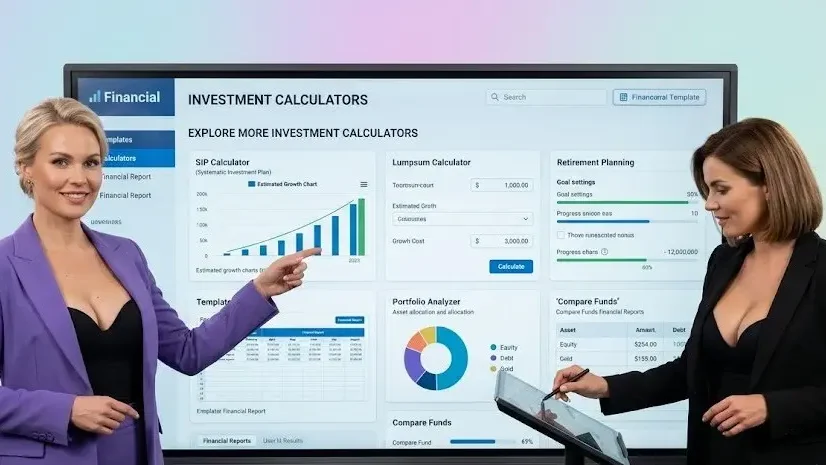
Explore More Investment Calculators
Smart investment planning goes beyond deciding how much to invest in a SIP. Explore our free investment calculators to estimate SIP growth, evaluate Step-Up SIP strategies, understand potential investment returns, and plan for long-term wealth creation.
Use these tools to compare different investment amounts, expected returns, investment tenures, and contribution patterns—whether you’re starting a new SIP, increasing your investment periodically, or working towards a long-term financial goal.
Related Finance & Investment calculator
- Free Lumpsum Investment Calculator: Maximize The Future Value
- Mutual Fund CAGR Calculator – Calculate Investment Returns
- Free SIP Calculator Online – Calculate Monthly SIP Returns
- SIP Goal Calculator – Monthly SIP Required To Reach Your Goal
- STP Calculator – Plan Mutual Fund Transfers & Estimate Returns
- SWP Calculator – Plan Monthly Withdrawals & Retirement Income
- XIRR Calculator – Find Your True Annual Investment Return (%)
- Step-Up SIP Calculator Online – Calculate SIP Growth & Returns
- Free Inflation Calculator: Estimate Future Cost Of Living
- Home Loan Eligibility Calculator – Check Maximum Loan Eligibility
- Personal Loan Eligibility Calculator – Check Loan Eligibility
- Home Loan Affordability Calculator – Estimate Home Buying Budget
- Debt-to-Income Ratio Calculator – Check Loan Eligibility
- Rent Vs Buy Calculator Online – Compare EMI, Rent & Investment
- Fixed Vs Floating Interest Rate Calculator – Compare EMI & Interest
- Flat Rate Vs Reducing Rate Calculator – Find Real Interest Rate
- Step-Up EMI Calculator – Calculate Increasing EMI Online
- Loan APR Calculator – Calculate Annual Percentage Rate
- Loan Refinancing Calculator – Calculate EMI & Interest Savings

Stay Ahead With Smarter Investment Planning
Disclaimer
The Mutual Fund Calculator is provided for informational and educational purposes only. Results are indicative estimates based on the investment amount, investment type, expected annual return, investment tenure, contribution frequency where applicable, and other information entered by the user. Actual investment value, returns, total investment, estimated gains, and wealth creation may vary depending on the performance of the underlying mutual fund investments, market conditions, timing of investments, applicable expenses, taxes, and other factors.
ToolSuite does not guarantee the accuracy of the estimates or any particular investment outcome. This calculator should not be considered financial, investment, tax, or professional advice. Mutual fund investments are subject to market risks, and past performance or an assumed rate of return does not guarantee future results. The return assumption used in the calculator is illustrative, and actual returns may be higher or lower.
Before making an investment decision, consider your financial goals, investment horizon, cash-flow requirements, risk tolerance, and ability to remain invested for the intended period. Review the relevant mutual fund scheme documents and consider consulting a qualified financial professional if required.